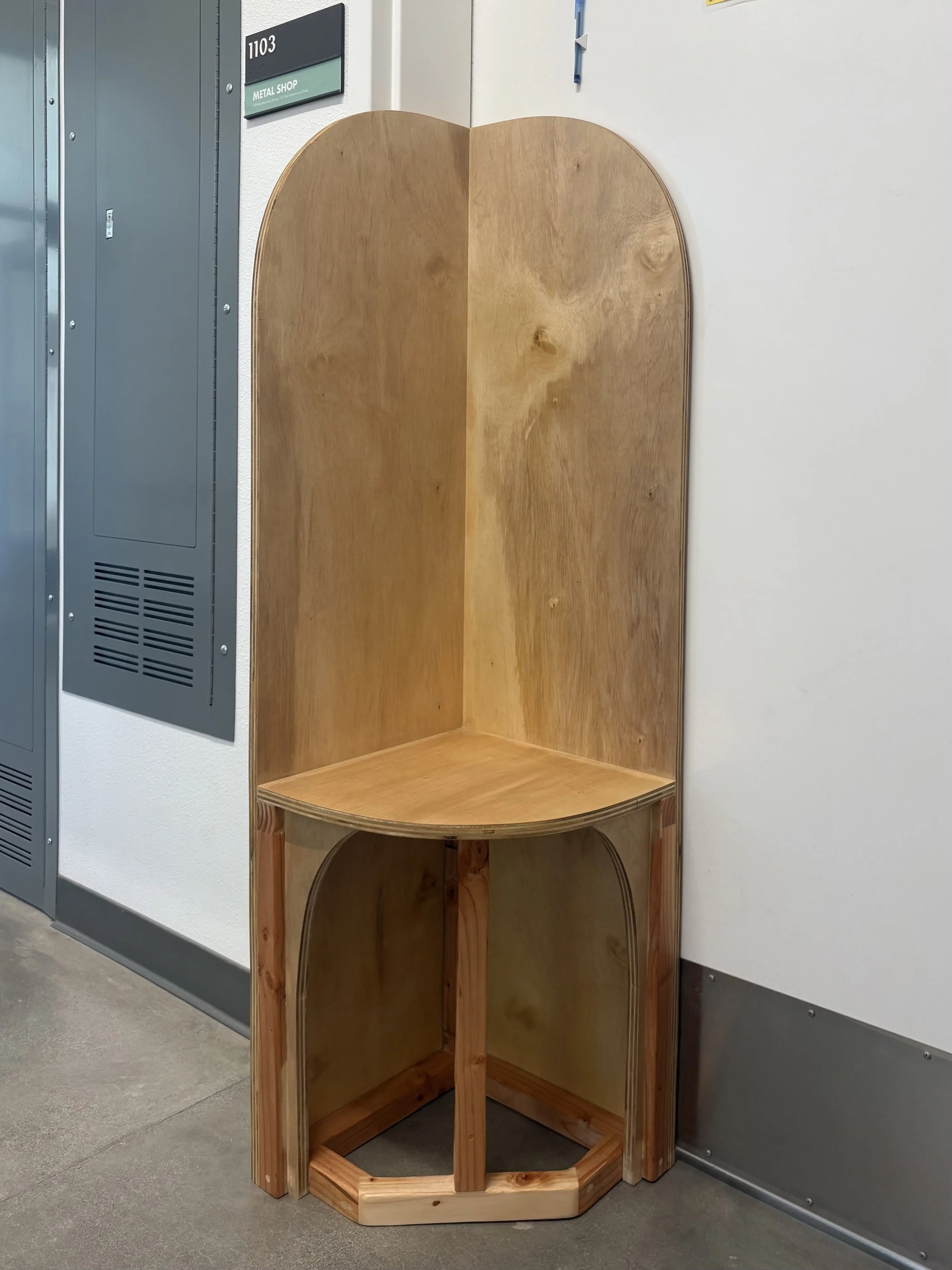
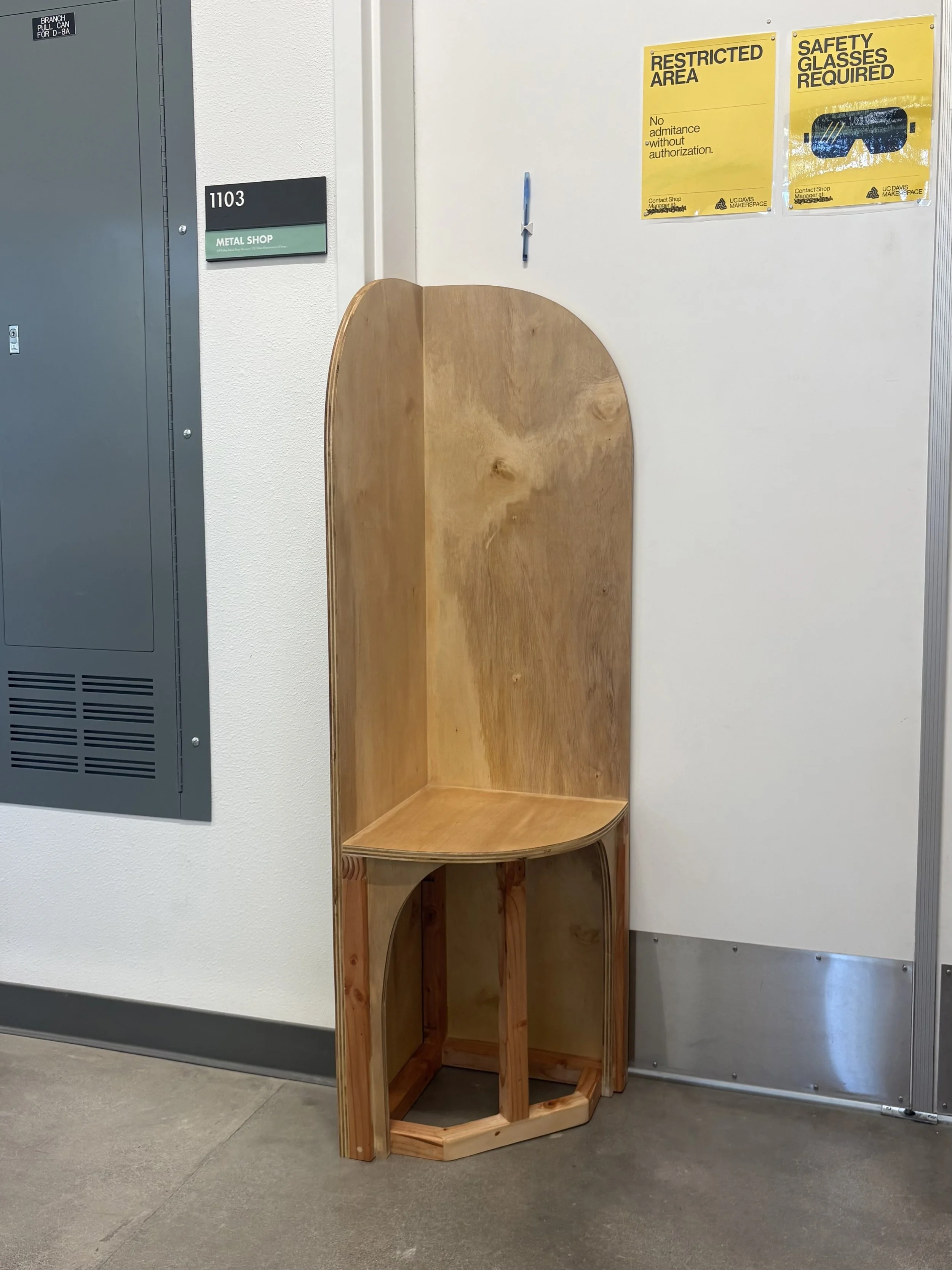
A Seat in the Corner
This project was developed for my Furniture Design course as an exploration of how design can create a “seat at the table” for underrepresented voices and ideas. The assignment challenged me to design and build a piece of furniture inspired by a specific ideological, cultural, social, or environmental theme that I believe deserves greater visibility within the design field. The project overall aims at reflecting an integration of craftsmanship with the role of design in shaping more inclusive and thoughtful spaces.
-
DES 135A: Furniture Design
-
March 2026
-
Drawings made with Adobe Illustrator
Concept
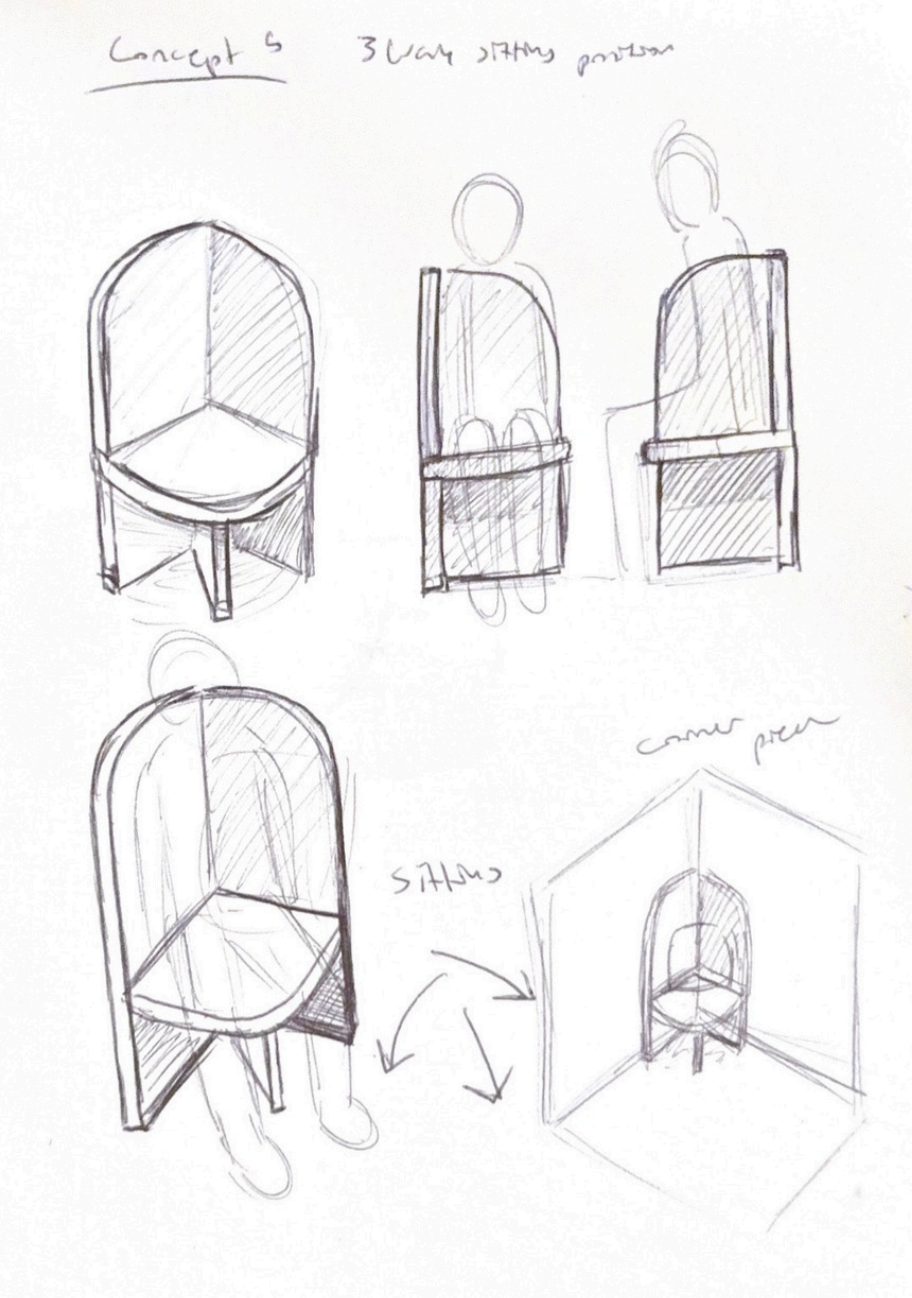
As a designer I believe in the importance of creating with the user in mind. It is essential to think about who the user might be and what experience we want to create for them. The Corner Chair was designed with the user’s mental health and feelings in mind, falling into the category of inclusivity. The idea of having a seat where the back can be embraced by two walls and being able to sit outwards and face everything else in the room intrigued me. I thought about myself and what kind of chair I would choose when sitting in a cafe and studying or even at home thinking or maybe praying. The mixture of privacy with the ability to see everything is rather comforting.
The corner serves as an intimate spot where someone can feel alone and within a space of comfort without feeling isolated from everything else. Rather than separating the user completely, it creates a space slightly removed from the loud, central parts of our lives, a place to the side where one can still observe and feel connected.
In terms of design, the Corner Chair is visually minimal and not overstimulating, allowing it to fit seamlessly into a variety of spaces. It adds value to a room without demanding attention. Its simplicity in form is balanced by the complexity of its construction, emphasizing thoughtfulness through craftsmanship and material choice. The chair avoids unnecessary visual noise and instead expresses clarity and material honesty.
Functionality is also essential. The chair was designed to be adaptable, usable across different contexts, environments, and users. Its simplicity shifts the focus away from itself and toward the user—their needs, their feelings, and their experience. In this sense, the chair embodies humility.
The materials of the Corner Chair are intentionally simple, consisting of plywood for the paneling and lumber for the frame and legs. The wood is conditioned to achieve a rich, warm finish.
Drawings v1
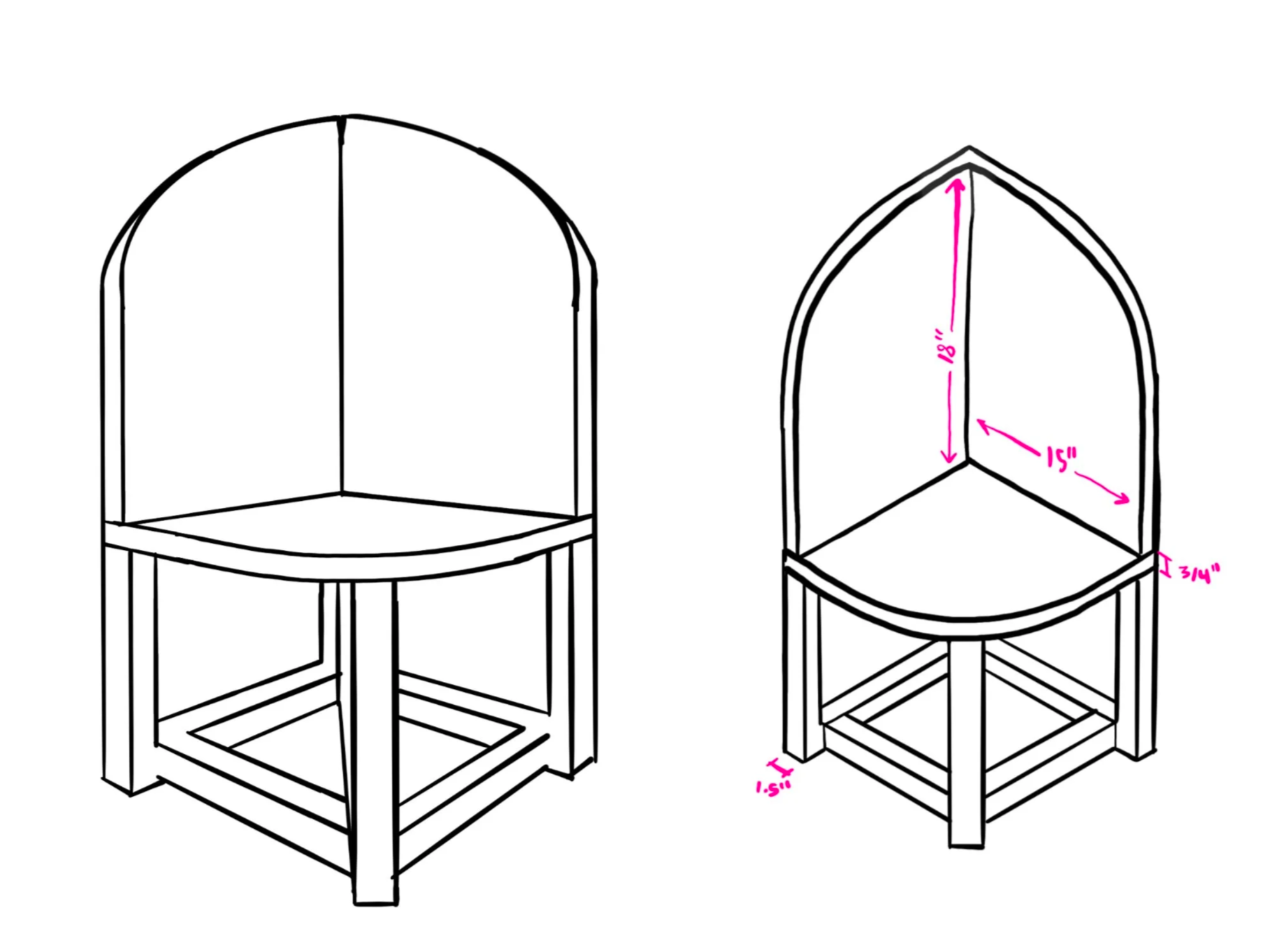
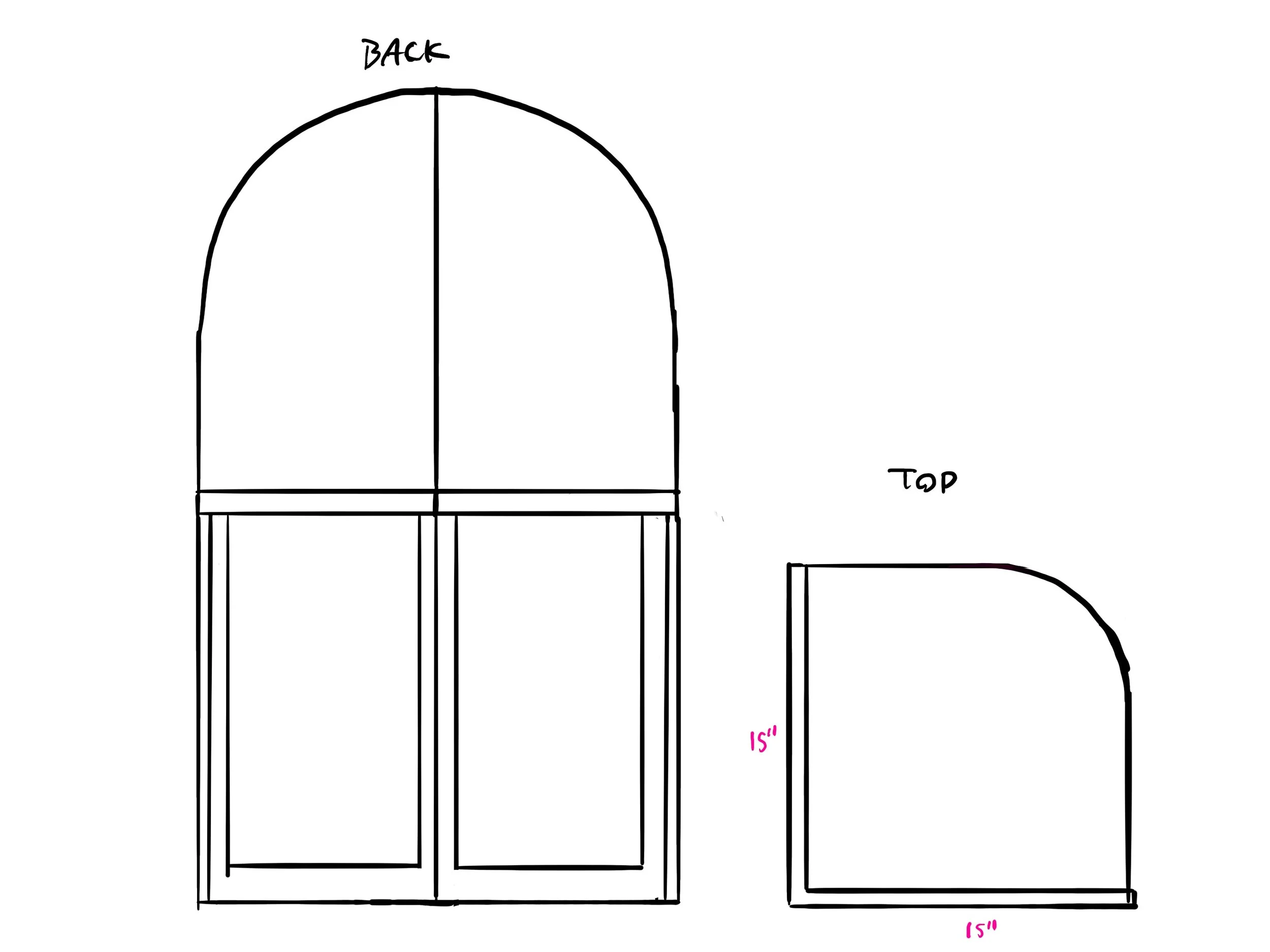
I initially thought about a chair where the back could be at a 90 degree angle to perfectly wedge into the corner of a room. This could then potentially allow the user to sit in multiple positions depending one which way they’d want to face
I decided to roll with my idea of creating a chair with a 90 degree back. Concerned about the amount of available materials I made the original designs as small as possible while remaining functional. The chair’s back is much shorter than it turned out to be and the chair height was set to be 34-36"
Drawings v2
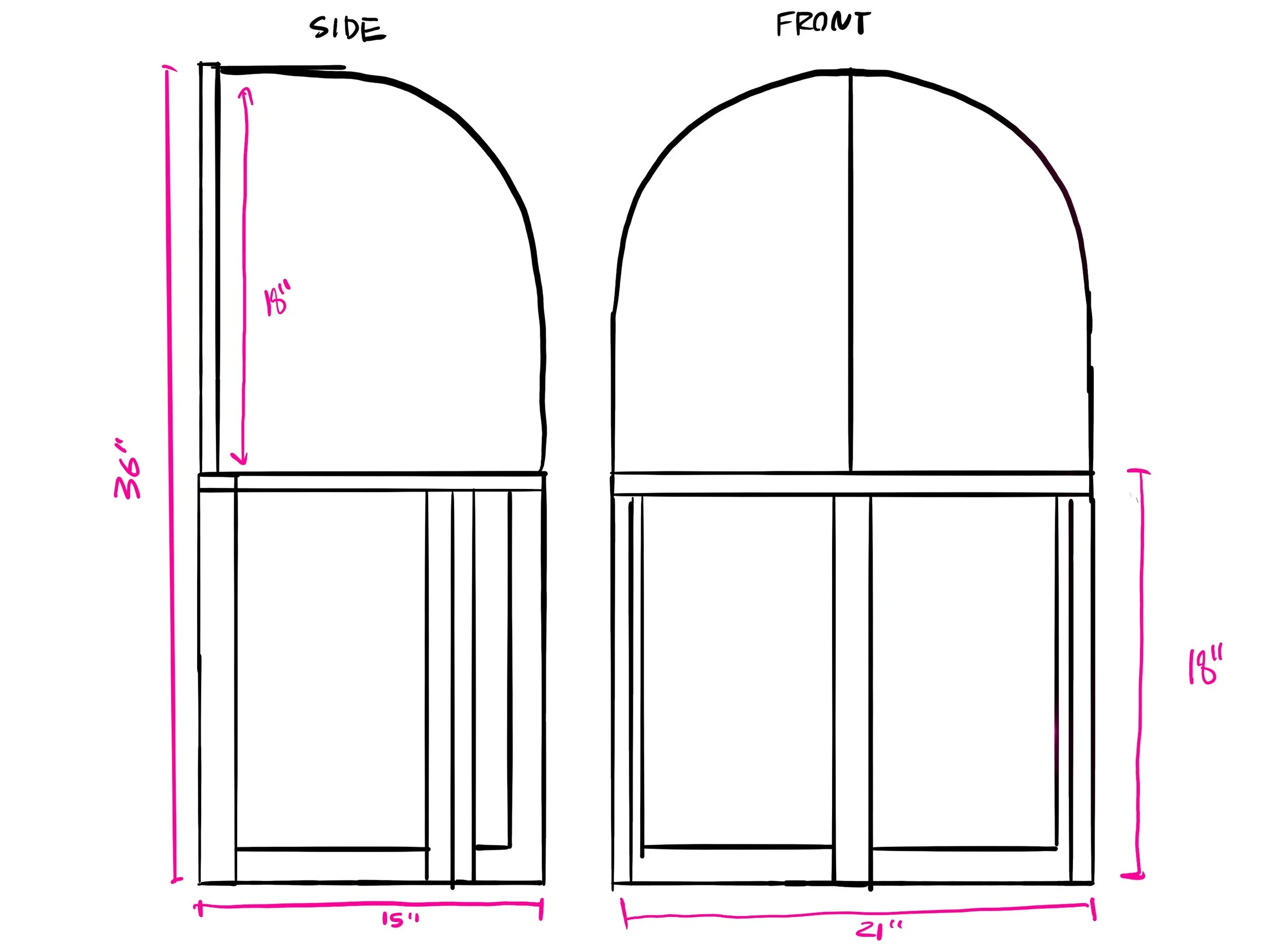
Final Drawings
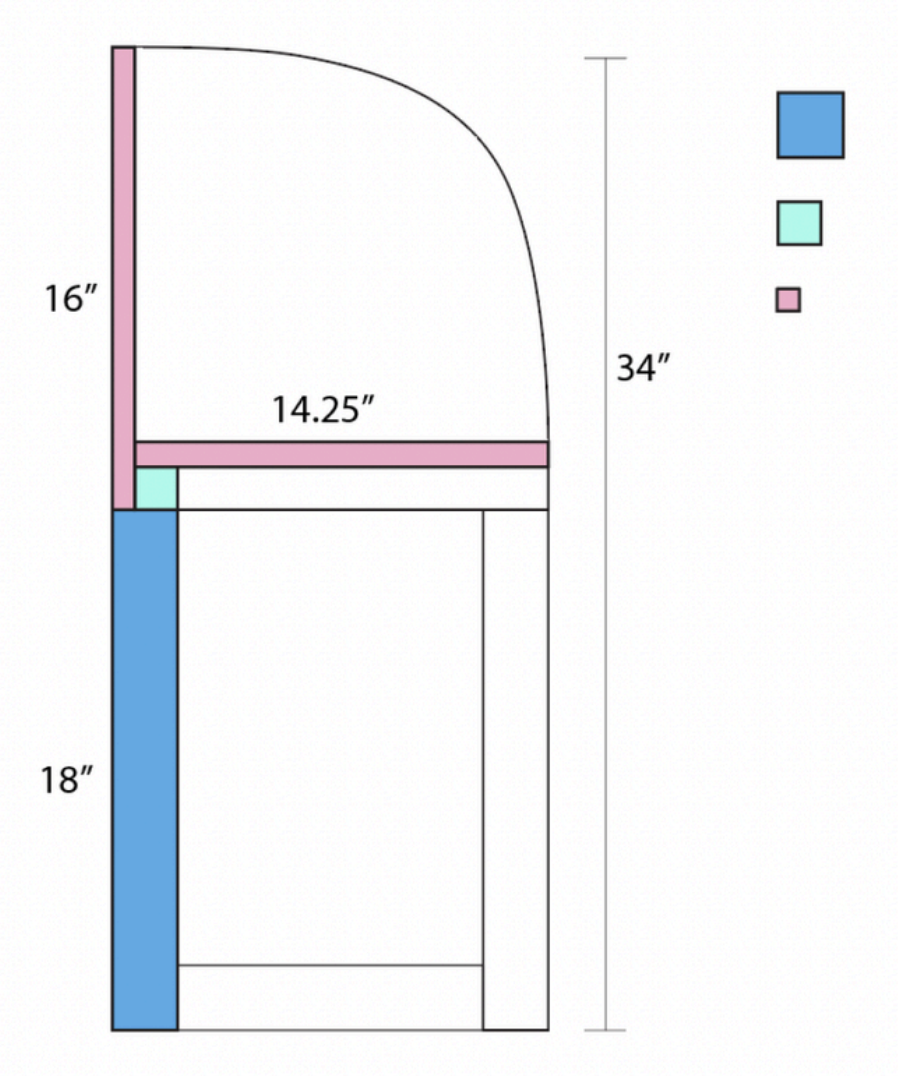
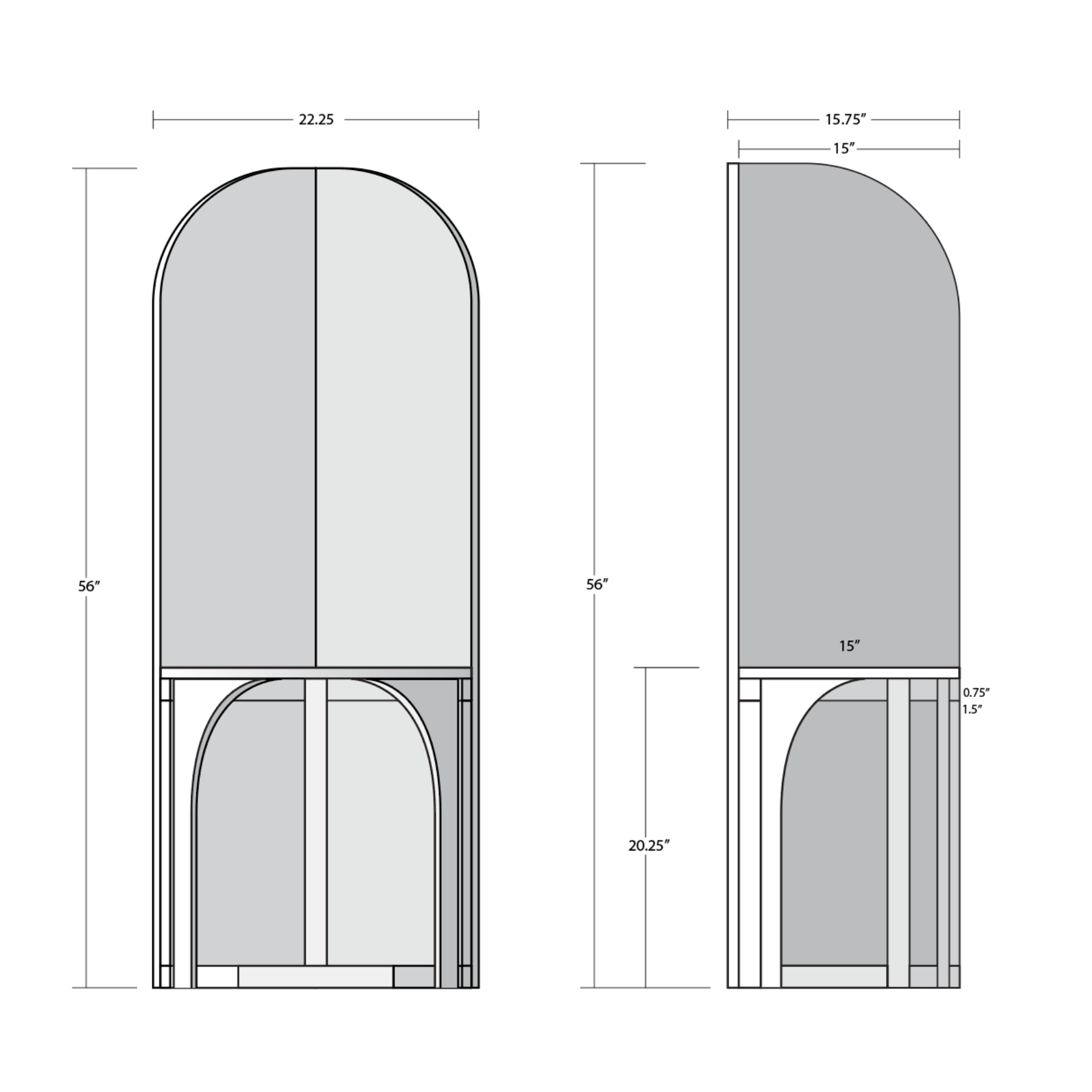
After consulting with the instructor, I refined the design by increasing the height of the backrest to fully support the user’s back. This adjustment more effectively reinforces the intended sense of intimacy, evoking a feeling similar to being enveloped or embraced.
Additionally, I introduced an arched form to the base of the chair to create a more cohesive and unified design language throughout the piece.
Materials & Cutting Plan
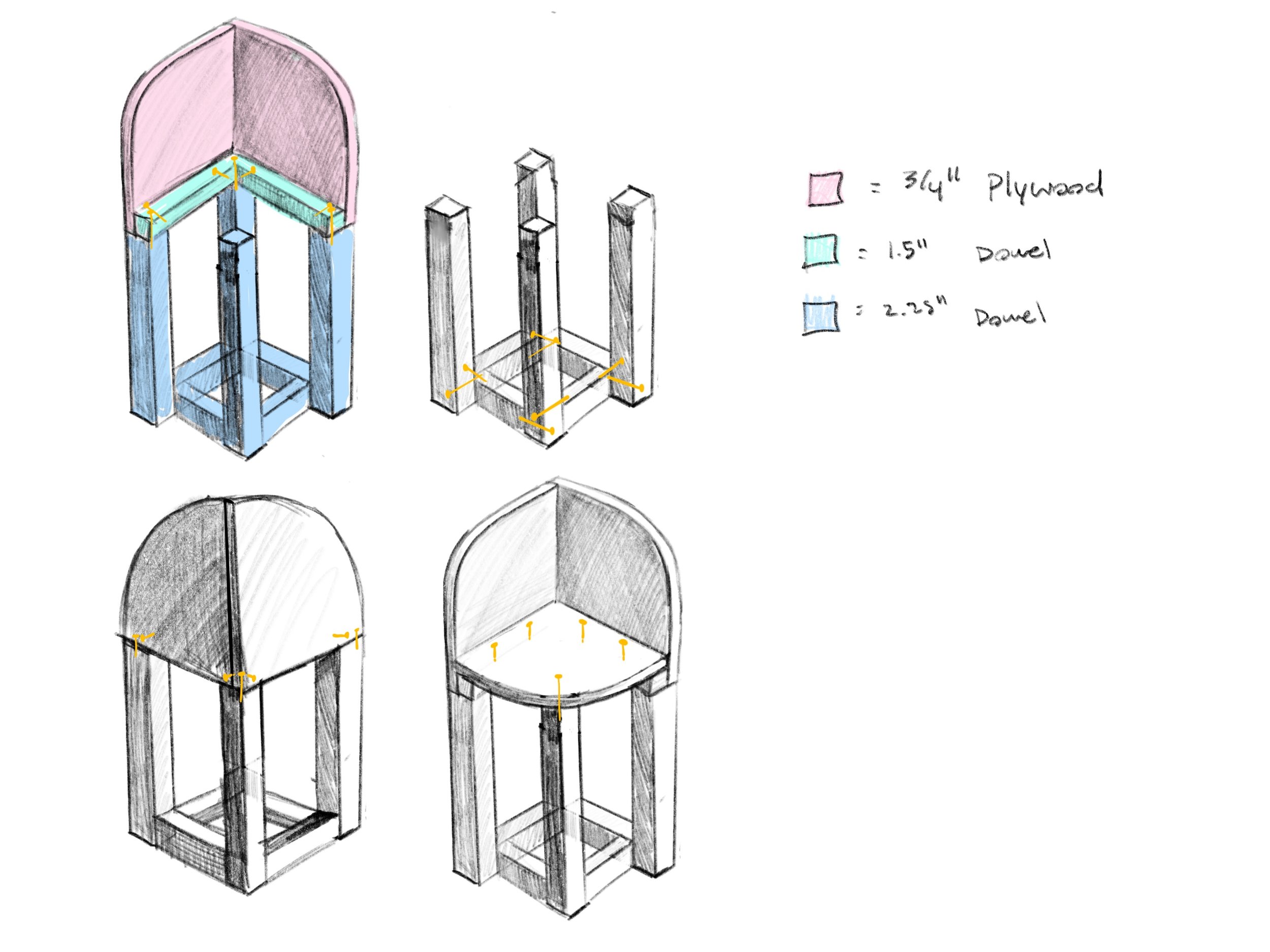
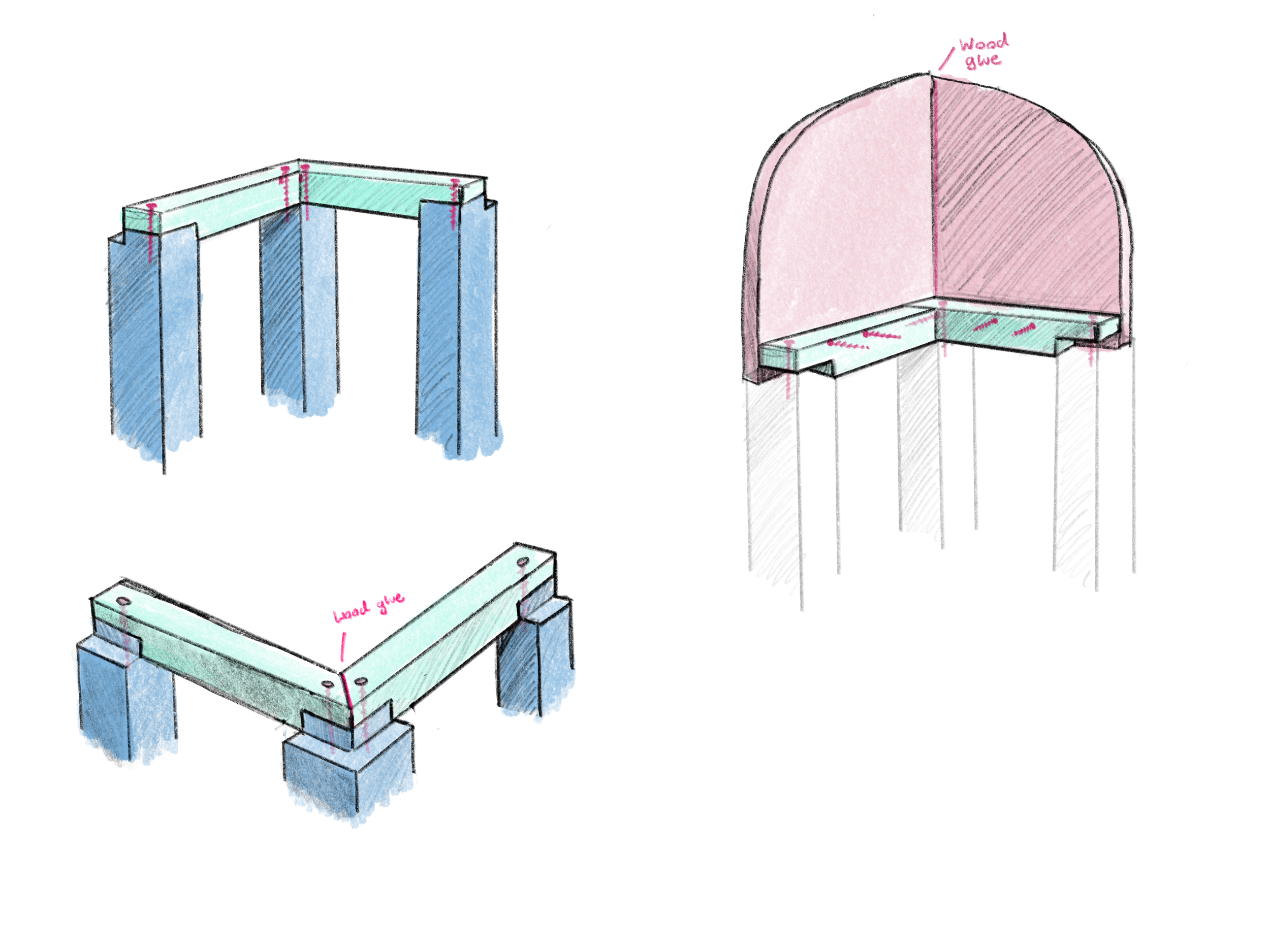
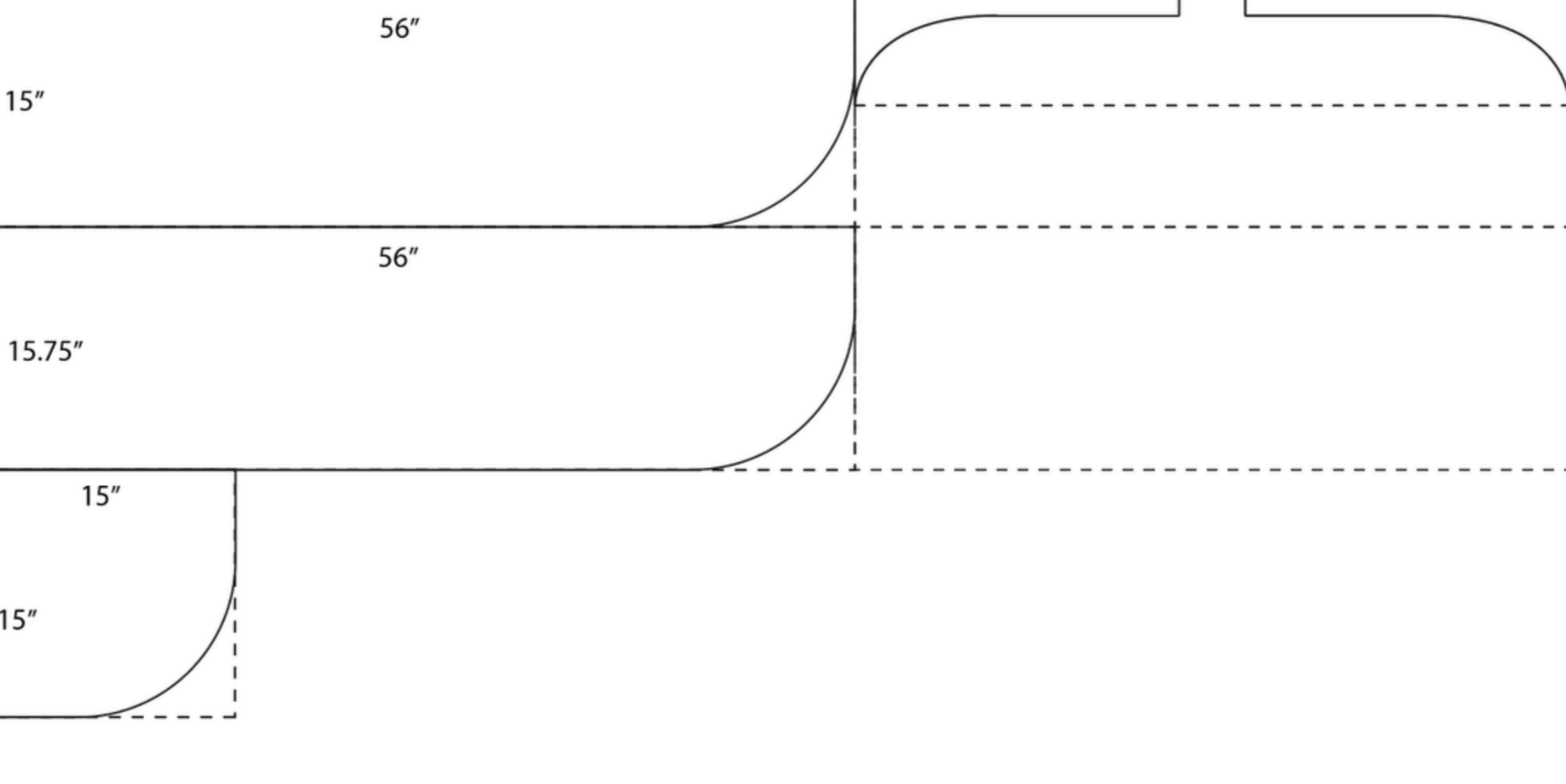
The materials consist of ¾ inch plywood for the paneled parts of the chair and 1 ½ inch lumber for the frame. The pieces were mainly connected with screws with the exception of wood glue and nails being used to reinforce the two back pieces to each other.

Building the Chair
The chair is displayed after all the pieces were assembled.
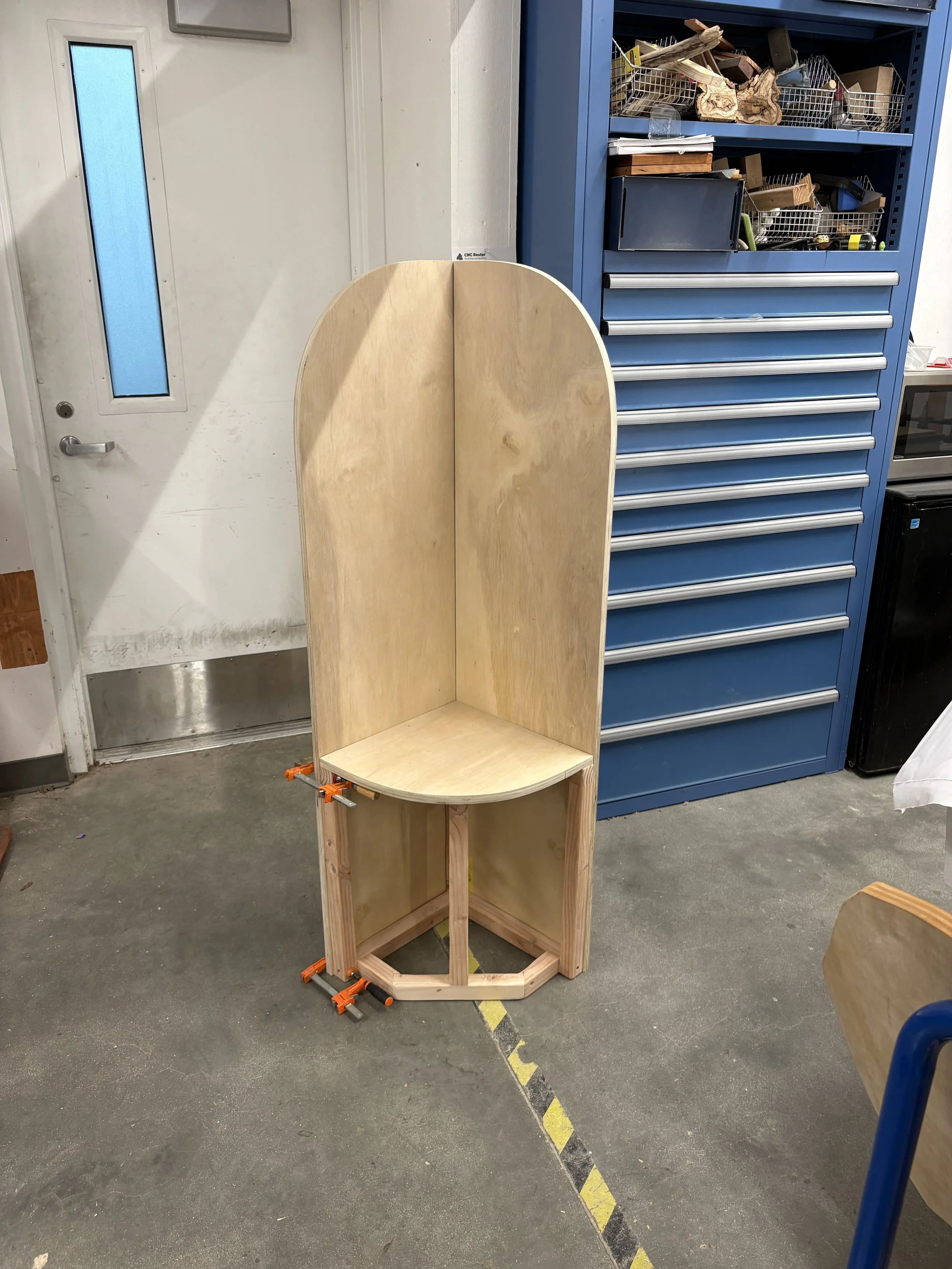
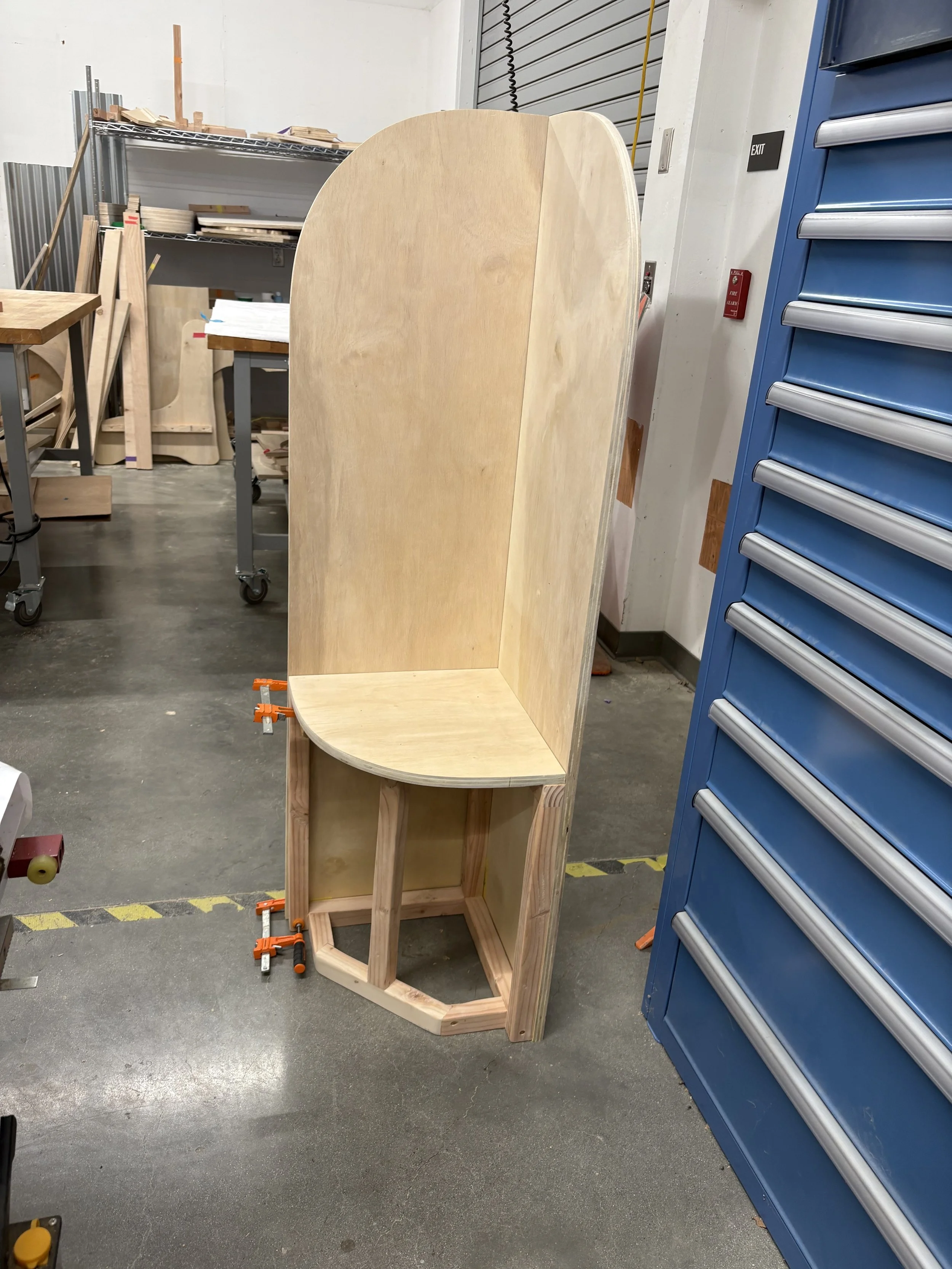
After all the assembly, the surfaces were sanded and plaster was used to fill holes and gaps.
After the plaster dried the areas where it was applied and the surface was sanded again until the wood had a smooth texture.
Finally wood conditioner was applied on every surface of the wood to give it a rich and warm finish.
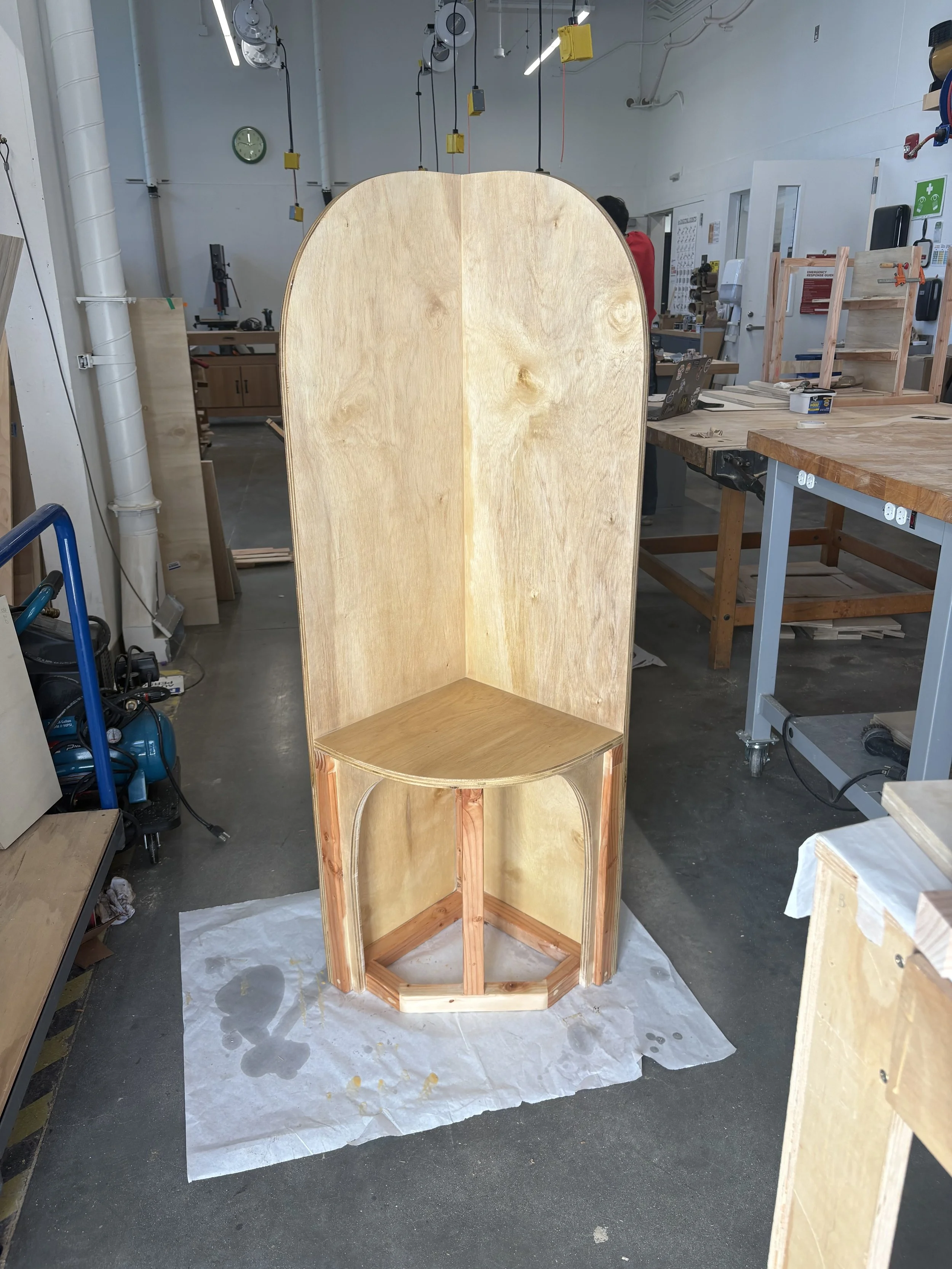
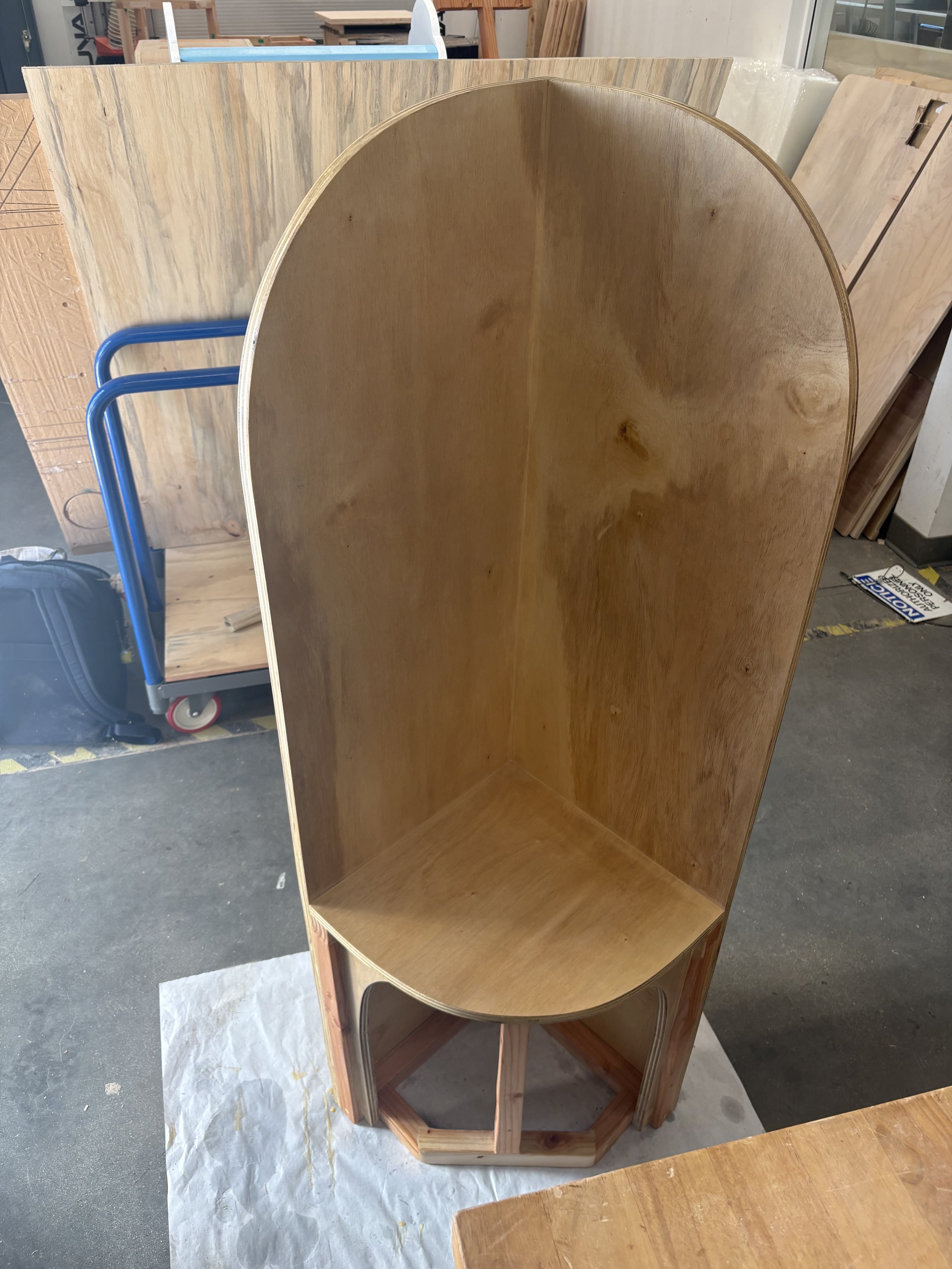
Final Photos